Electrical problems are not always visible during a routine walkthrough or visual inspection. A panel, breaker, disconnect, or electrical connection may appear normal on the outside while heat is building inside the system.
Infrared thermography is one tool that can help identify these hidden issues before they develop into larger problems.
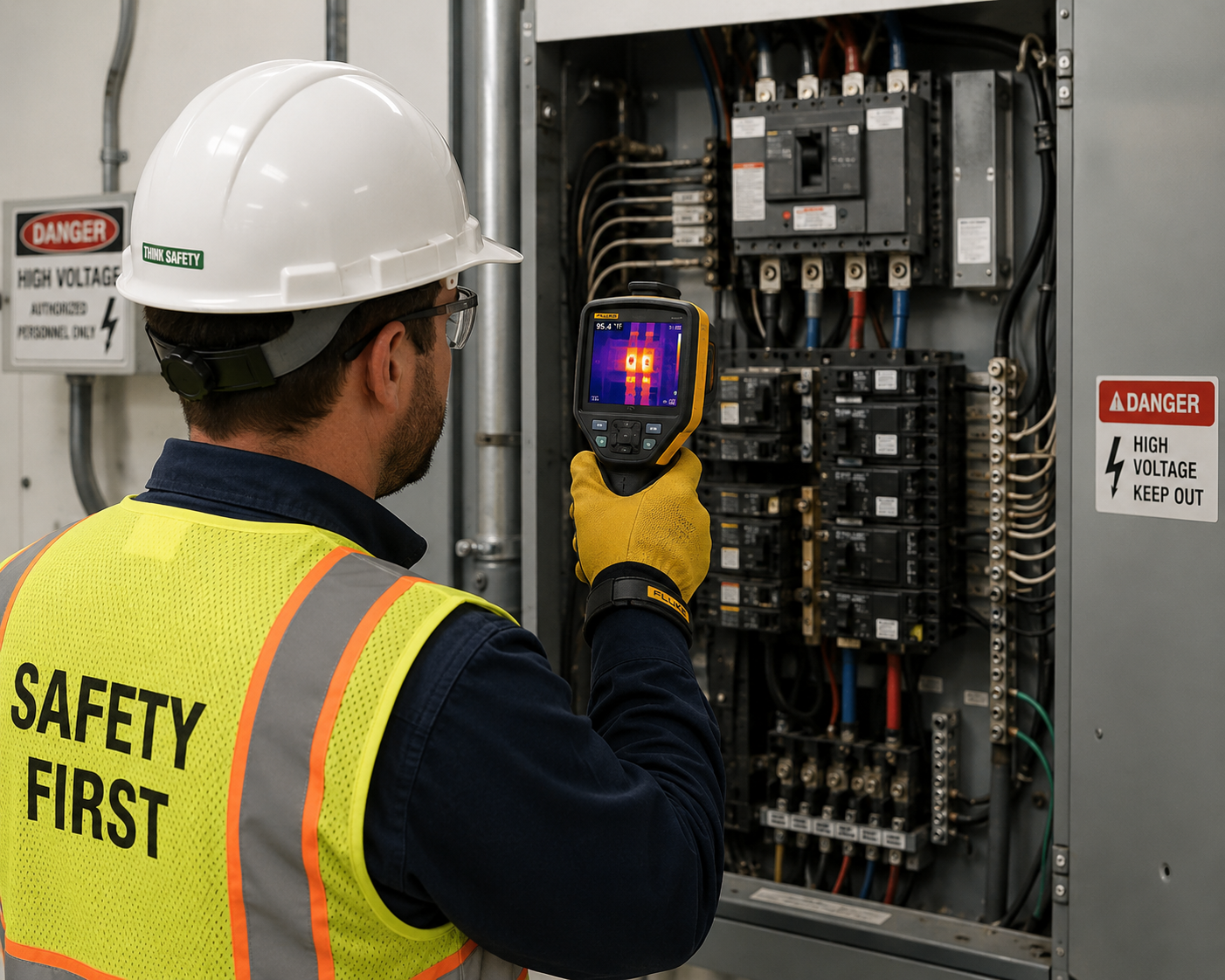
What Is Infrared Thermography?
Infrared thermography, often called IR thermography, uses a thermal imaging camera to detect heat patterns on equipment and components. In electrical systems, abnormal heat can be a sign of a loose connection, overloaded circuit, failing component, or other condition that may need attention.
The inspection is typically performed while equipment is energized and operating under normal load. This allows the camera to capture temperature differences that may not be present when equipment is shut down.
Why Heat Matters in Electrical Equipment
Heat is often one of the first indicators that something is not working as intended. Electrical resistance, poor connections, overloaded circuits, and failing components can all create excess heat.
If left unaddressed, these conditions may contribute to:
- Equipment failure
- Unexpected downtime
- Damage to electrical components
- Increased fire risk
- Higher repair costs
- Safety concerns for employees and maintenance personnel
Finding abnormal heat early gives maintenance teams an opportunity to evaluate the issue and determine whether corrective action is needed.
What Types of Equipment Can Be Inspected?
Infrared thermography is commonly used to inspect a variety of electrical systems and components, including:
- Electrical panels
- Switchgear
- Breakers and disconnects
- Motor control centers
- Transformers
- Bus ducts
- Electrical connections
- Other critical electrical equipment
Because the inspection is non-invasive, it can often be completed without interrupting normal operations.
How IR Thermography Supports Preventive Maintenance
Infrared inspections are not a replacement for qualified electrical maintenance, but they can provide useful information as part of a broader preventive maintenance program.
Thermal images and temperature readings can help maintenance teams identify areas that may need further evaluation, prioritize repairs, and track recurring issues over time. This can be especially helpful in facilities where equipment uptime is critical or where electrical systems support production, warehousing, manufacturing, or other essential operations.
What to Expect from an IR Thermography Report
After an inspection, findings are typically documented in a report. A useful report may include:
- Thermal images of inspected equipment
- Visual images for reference
- Location of the identified concern
- Temperature differences or abnormal heat patterns
- Possible causes
- Recommended follow-up actions
The report helps facility managers, safety professionals, and maintenance teams make informed decisions about next steps.
A Practical Tool for Electrical Safety
Infrared thermography is a practical way to gain more visibility into the condition of electrical equipment. By identifying abnormal heat patterns early, organizations can better understand potential risks and take action before issues become more serious.
For facilities focused on safety, reliability, and preventive maintenance, IR thermography can be a valuable part of an overall electrical safety program.
Request More Information
Interested in infrared thermography services for your facility? Complete the form below and our team will follow up to answer your questions or provide a quote.
Contact Us
"*" indicates required fields
