Workplace violence is a concern across all industries, including offices, manufacturing facilities, healthcare settings, schools, warehouses, and public-facing environments. While severe incidents like active shooter events are rare, they are part of a broader issue that organizations should be prepared to address.
A strong workplace violence prevention program focuses not only on emergency response, but also on awareness, prevention, and preparedness.
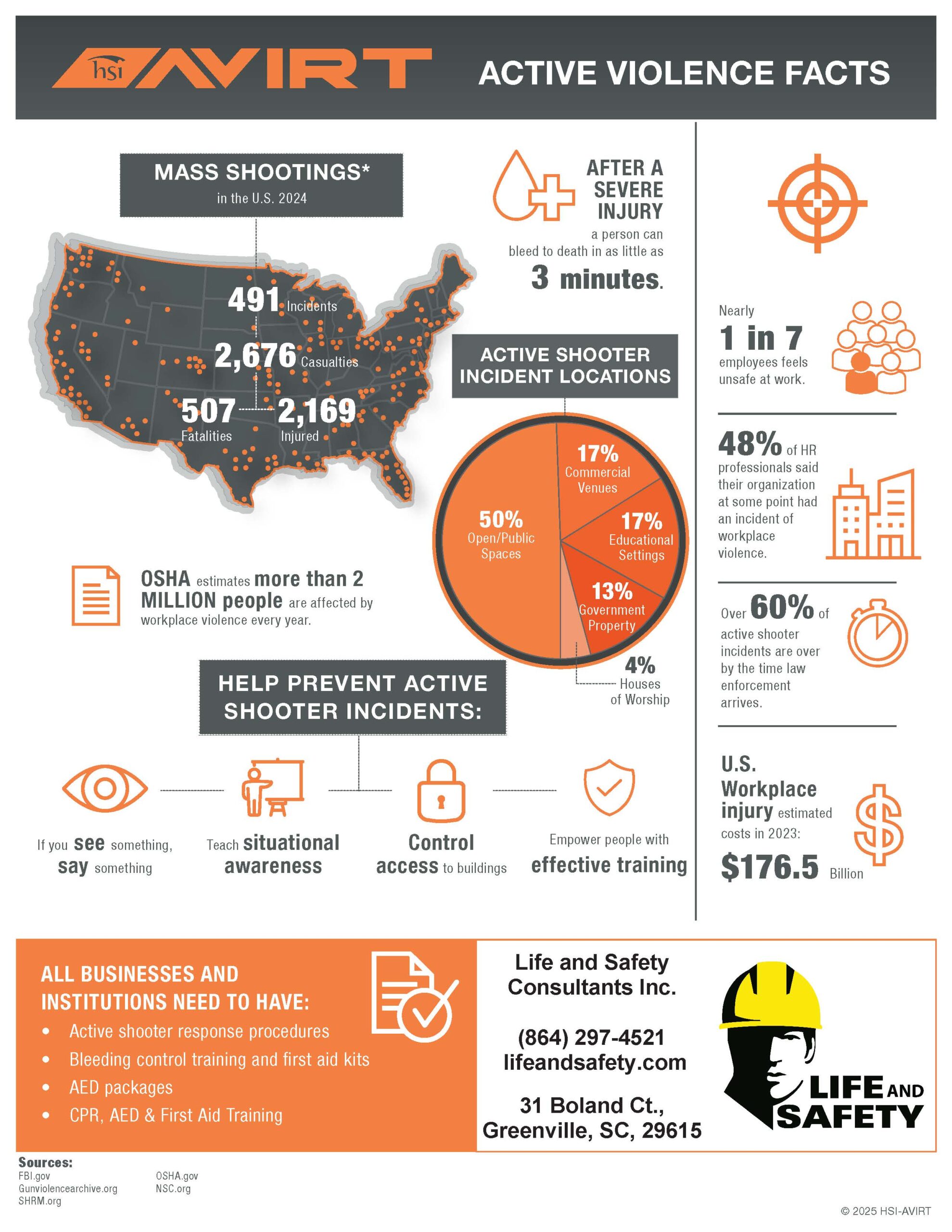
Why Workplace Violence Prevention Matters
Preventing workplace violence starts with recognizing that risks can develop over time. Concerning behaviors, escalating conflicts, and gaps in communication can all contribute to unsafe situations if they are not addressed early.
Organizations that take a proactive approach are better positioned to:
- identify and report warning signs,
- reduce the likelihood of incidents,
- and respond more effectively if an emergency occurs.
Key Elements of a Workplace Violence Prevention Program
1. Awareness and Early Reporting
Employees should understand how to recognize concerning behaviors and feel comfortable reporting potential issues. Early intervention can play an important role in preventing escalation.
2. Clear Policies and Procedures
Organizations should have written policies that define workplace violence, outline reporting procedures, and establish expectations for employee conduct.
3. Emergency Planning
Even with strong prevention efforts, organizations should be prepared for emergencies. Plans should include evacuation procedures, communication protocols, and guidance for various types of incidents.
4. Employee Training
Training helps employees build situational awareness and understand how to respond during a workplace violence incident. Practical guidance can improve confidence and decision-making under stress.
5. Basic Trauma Response Preparedness
In serious incidents, immediate medical response may not be available. Providing employees with basic bleeding control and trauma response knowledge can help save lives.
Building a Culture of Safety
Workplace violence prevention is not a one-time effort. It should be part of an ongoing safety culture supported by leadership, reinforced through training, and regularly reviewed.
When employees are informed, prepared, and encouraged to speak up, organizations create a safer and more resilient work environment.
Final Thoughts
Workplace violence prevention is an important part of any safety program. By focusing on awareness, planning, and training, organizations can reduce risk and improve their ability to respond when it matters most.
Contact Us
"*" indicates required fields
